%20%20-%20Menu.svg)





Ecommerce Return Statistics: Key Trends & Insights for 2026



In this blog
TL;DR – Why Ecommerce Returns Are a Strategic Priority in 2026
Ecommerce returns have ballooned into an $849 billion annual problem for U.S. retailers, reshaping how brands think about logistics, profitability, and customer loyalty. Retailers who treat returns as a strategic lever — not a cost center — gain measurable advantages in conversion and repeat purchase rates.
-
Return Rate Reality – 20.8% average rate is rising not falling
-
Financial Stakes – $849B in returns pressures margins and supply chains
-
Policy as Conversion Tool – free returns and transparency directly lift purchase rates
-
Late Delivery Problem – 35% of returns triggered by delayed shipments
-
AI-Driven Exchanges – smart tools convert returns into revenue-saving exchanges
-
Sustainability Pressure – fast fashion returns create serious landfill consequences
-
Reverse Logistics Process – six-step return flow determines efficiency and customer trust
Why Ecommerce Returns Are a Strategic Priority in 2026
Online shopping continues to redefine retail in 2026, but it comes with a persistent problem that businesses must urgently address. That problem is ecommerce returns. As consumer expectations evolve and free returns become a norm, managing returns has shifted from a backend inconvenience to a strategic function.
Gone are the days when a robust return process was a luxury. Today, it is a necessity. Failing to offer a convenient and transparent return policy can be a dealbreaker, with a direct impact on conversion rates, customer satisfaction, and brand reputation.
At the same time, reverse logistics places immense pressure on ecommerce business operations, profitability, and sustainability efforts. In this article, we explore the latest ecommerce return statistics, providing insights into trends, challenges, and actionable strategies for online retailers in 2026.
Key highlights:
-
Returns cost US retailers nearly $849 billion in 2025, with 19.3% of all online sales.
-
Clothing and shoes remain the most returned product categories across all demographics.
-
35% of customers sent back items due to late deliveries.
-
Fast fashion returns fill up landfills and have an environmental impact.
-
AI-driven return management can convert significant amount of returns into exchanges.
Why Ecommerce Return Policies Matter and What They Actually Involve
For any ecommerce business, a transparent and easy-to-follow returns policy is a cornerstone of building trust. Online shoppers lack the physical cues of brick-and-mortar stores, no trial room, no tactile check, and no real-time validation of what they are buying. This disconnect gives rise to buyer's remorse, wrong item deliveries, and ultimately, higher return rates.
A strong return process is a decisive factor for online customers. A hassle-free returns experience increases customer loyalty and encourages future purchases. Offering store credit or free return shipping has been proven to enhance customer satisfaction. In contrast, poor return experiences can erode trust, hinder repeat business, and tarnish brand reputation.
The ecommerce return journey covers multiple steps that businesses must execute correctly to ensure a seamless customer experience and operational efficiency.
What Are the Key Steps in the Ecommerce Return Process?
-
Return Initiation: Usually done through an online returns portal or customer service, this is the customer's first step. Clarity and simplicity are key.
-
Approval and Instructions: Once the return is approved, detailed guidelines on how to send the item back must be shared, including return labels.
-
Shipping and Reverse Logistics: This phase involves transporting the item back to the seller or warehouse. Efficient coordination is essential to avoid delays.
-
Inspection and Quality Check: Returned items must be reviewed for damage, usage, or fraud before processing refunds or exchanges.
-
Refund or Exchange Processing: Whether the customer receives store credit, a replacement product, or a refund depends on your ecommerce policy.
-
Restocking or Disposal: Returned goods must be categorized and processed accordingly. For example, resellable items go back to inventory, while others are refurbished, donated, or discarded.
Ecommerce Return Statistics in 2026: Key Data Every Retailer Should Know
Returns have evolved into a data-driven domain that businesses must understand and anticipate. These statistics help retailers refine their strategies, enhance customer satisfaction, and protect profit margins.
1. What Is the Average Ecommerce Return Rate in 2026?
The average ecommerce return rate is a crucial benchmark that reflects the broader challenges of selling online. According to the National Retail Federation, the average return rate for ecommerce purchases in the U.S. was approximately 16.9% in 2024.
Returns then climbed sharply, with CapitalOne Shopping reporting that the average ecommerce return rate reached 24.5% in 2025. Heading into 2026, the average ecommerce return rate now sits at approximately 20.8%, with projections ranging from 20.4% to 24.5% depending on product category.
For ecommerce businesses, this trend highlights the importance of crafting precise product descriptions, improving fulfillment accuracy, and implementing more efficient return management tools.
2. General Ecommerce Return Statistics and Trends You Need to Know
Ecommerce returns have grown significantly over the years, with businesses facing rising operational and logistical costs. Here are some of the most telling statistics that reflect the current state of ecommerce returns:
-
$849.9 billion in returns (2025): Retail returns in the United States totaled $849.9 billion, with 19.3% of all online sales sent back. As ecommerce volumes continue rising into 2026, this puts enormous pressure on inventory and supply chains.
-
30% return rate for online purchases: Compared to the 8.89% return rate for physical stores, nearly 30% of online purchases are returned. This stat highlights how the inability to inspect items before buying drives up return rates.
-
Sizing and fit issues drive 40 to 50% of ecommerce returns, making them the top return reason heading into 2026, while damaged or defective goods account for a significant share at around 16%. Together these highlight the need for better sizing guidance, accurate product descriptions, stronger packaging, and reliable ecommerce fulfillment.
-
Return rates have doubled since 2021: Online returns have increased significantly post-pandemic, partly due to rising ecommerce sales and evolving customer expectations.
-
24.5% of global e-commerce sales are returned: With ecommerce forecasted to contribute 24.5% to global retail sales in 2025, businesses must prioritize efficient returns processing to protect profit margins.
3. How Do Consumers Behave Around Ecommerce Returns Globally?
Returns are no longer just a logistical concern. Today, they are a customer experience issue.
-
According to recent studies, 84% of UK consumers claim they would not buy from a brand again after a poor return experience. A single negative experience can lead to a long-term loss of customer trust and revenue.
-
67% of shoppers check the return policy before making a purchase. Shoppers want assurance before they buy online. Transparent policies can influence conversions.
-
Return windows are another critical factor. Nearly 63% of online customers expect at least a 30-day window to return products. Flexibility is key to encouraging purchases and maintaining customer satisfaction.
-
62% of consumers say they are more likely to make a purchase online if they can return an item in store. The hybrid model of buying online and returning in store can significantly improve customer satisfaction and encourage repeat purchases.
-
58% of consumers prefer no-questions-asked return policies. A frictionless process enhances loyalty and reduces frustration.
-
30% of shoppers engage in overbuying — ordering multiple items with the intent to return some. This behavior, often called bracketing, is particularly prominent in categories such as apparel and footwear. This makes it essential for ecommerce brands to implement effective strategies.
4. What Are the Most Common Reasons for High Ecommerce Return Rates?
Understanding what causes high return rates helps businesses make meaningful improvements.
-
Buyer's remorse: Many customers regret purchases, especially impulse buys made during sales. Clear product visuals and contextual content can reduce this.
-
Incorrect items: 23% of online shoppers receive the wrong item, pointing to fulfillment process inefficiencies. Strengthening warehouse accuracy and tech-based picking can minimize errors.
-
Damaged products: Approximately 20% of online returns are due to product damage during delivery. This highlights the need to manage returns more effectively through improved last-mile logistics.
-
Visual discrepancies: 22% of shoppers cite differences between the online image and the actual product as a reason for returning. Using 3D models and customer reviews with real photos can reduce this mismatch.
-
Late deliveries: 35% of customers return items due to delayed deliveries or other service issues. Investing in last-mile logistics and proactive communication is vital.
Businesses that implement detailed product descriptions, AR previews, and robust reverse logistics systems are better equipped to manage returns effectively.
5. Ecommerce Return Rates by Marketplace and Platform: Amazon, Alibaba, and More
Platform-specific return rates offer valuable insights into customer behavior and effective platform strategies.
Amazon: The ecommerce giant maintains an overall return rate of around 10%, though this varies sharply by category. Electronics run 10 to 20%, while apparel exceeds 30%, according to 2026 seller data. At Amazon's scale, even a 10% rate means over 13 million returned packages processed each week. Size and fit issues remain the leading driver for apparel, reinforcing the need for accurate sizing guidance and product descriptions.ct descrip
Alibaba: The platform protects buyers through its Trade Assurance program, with millions of products covered by a money-back policy and refund claims accepted within 30 days of delivery, extended to 60 days for Enterprise buyers. Its Easy Return service lets buyers in eligible countries return defective products locally at no extra cost, underscoring its focus on consumer protection.
Returnado: A Swedish startup that converted over 30% of client returns into exchanges through real-time return insights and flexible options. Acquired by nShift in 2021, the technology now operates as nShift Return.
These stats reveal how leveraging customer data and offering omnichannel return options can enhance customer satisfaction and manage returns smartly. Retailers looking for similar capabilities can explore leading returns management software platforms to streamline their operations.
6. Ecommerce Return Rates by Product Category in 2026
Different categories see vastly different return rates:
-
Clothing: The highest return rate of any category, with apparel averaging around 25% of online orders in 2026 and ranging from 20% to 40% depending on the segment. Returns are driven by discrepancies in size and style, as well as bracketing behavior. In some markets, clothing return rates exceed 50%, with Switzerland leading European fashion returns at around 62%.
-
Shoes: Second highest, mainly due to comfort and fit issues. Customers often buy multiple sizes and return the rest.
-
Books, Music, and Games: Only 8% return rate. Fewer subjective variables make these purchases less prone to returns.
Categories with higher return rates must adopt better sizing charts, AR previews, and personalized recommendations. Fashion retailers in particular can benefit from dedicated returns apps built for clothing stores to handle the volume and complexity of apparel returns. Brands should encourage customers to share photos and feedback to help future buyers make informed decisions.
| Category | Return Rate (%) |
| Apparel | 25% |
| Beauty | 8% |
| Electronics | 11% |
| Health and Wellness | 7% |
| Jewellery | 4% |
| Sports & Outdoor | 14.8% |
7. What Is the Financial and Environmental Impact of Ecommerce Returns in 2026?
Returns have consequences that extend far beyond restocking shelves.
According to Appriss Retail's 2026 Total Retail Loss Benchmark Report, returns added up to $706 billion in 2025, of which $100 billion was preventable fraud and abuse. Separately, 9% of all returns in 2025 were classified as fraudulent, and 85% of retailers are now deploying AI to detect and prevent return fraud.
Return fraud includes returning used products, exploiting store credit systems, or manipulating payment methods. Businesses increasingly rely on ecommerce fraud prevention software to detect and curb these patterns before they erode margins.
Returns also have a significant environmental impact. Fast fashion returns frequently end up in landfills, and transportation from reverse logistics operations contributes to carbon emissions. Retailers face mounting pressure to adopt sustainable returns practices.
To address these challenges, some businesses are shifting toward encouraging exchanges over refunds, offering store credit instead of cash back, and implementing AI-powered systems to monitor and control return abuse. Appriss Retail notes that adding a "warn and approve" decision step can reduce abusive returns by 90% without impacting customer loyalty.
How to Minimize Ecommerce Returns: Smart Strategies for Online Retailers in 2026
Reducing return rates is not just about saving money, it is about elevating the online shopping experience.
Proven Ways to Reduce Your Ecommerce Return Rate:
-
Enhance Product Descriptions: Include measurements, fabric details, and comparison guides to reduce sizing issues.
-
Leverage AR and 3D Tools: Let customers visualize products more effectively to reduce buyer's remorse.
-
Offer Multiple Sizes with Guidance: Provide clear guidance when offering products in multiple sizes to ensure a seamless shopping experience.
-
Improve Packaging and Fulfillment: Damaged goods account for a large share of online returns. Invest in protective materials and work with reliable fulfillment companies.
-
Offer Flexible Returns: Providing free return shipping and in-store returns can encourage customers while boosting loyalty. Consider automating your Shopify returns to reduce manual overhead and speed up refund processing.
-
Use Data-Driven Insights: Track customer feedback and return data to refine operations. A strong post-purchase experience platform can surface return trends and help you act on them proactively.
Smart ecommerce brands today are adopting agile tech stacks that not only manage returns but also create a seamless customer experience. Explore how ecommerce automation tools can streamline every stage of the returns workflow, from initiation to restocking.
How ClickPost Helps Ecommerce Retailers Optimize and Manage Their Returns Process
ClickPost simplifies what has traditionally been a complex, resource-draining returns process. For modern ecommerce businesses struggling with high return rates and dissatisfied customers, ClickPost offers a streamlined, tech-forward solution that converts returns into revenue opportunities.
Key features of ClickPost’s returns management:
-
Self-Serve Returns Portal: Allows customers to initiate and manage returns intuitively.
-
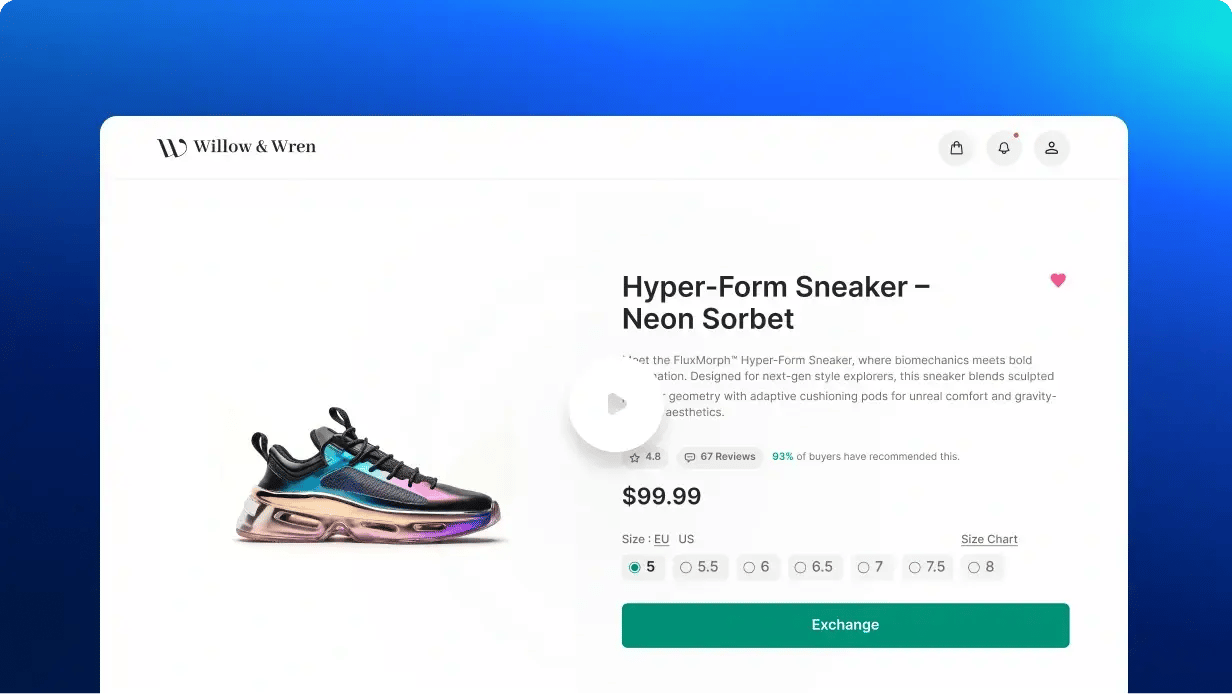
Automated Refunds and Exchanges: Let customers choose gift cards, instant exchanges, or refunds, with minimal manual effort.
-
Real-Time Tracking: Both customers and businesses can track the return shipment process in real time.
-
Personalized Exchange Nudges: Utilize AI to encourage customers to exchange items rather than return them.
-
Policy Flexibility: Businesses can establish customized return and refund policies that align with their specific operations.
ClickPost's AI-powered nudges have helped ecommerce brands convert 54% of returns into exchanges and retain 40% of revenue through store credit.
Ready to regain control over your returns? Book a demo with ClickPost and discover how to turn returns into a strategic advantage.
Final Thoughts: How to Make Ecommerce Returns Work for Your Business in 2026
Returns do not have to be the weak link in your ecommerce strategy. In fact, they can be your secret weapon, but that requires managing returns with intelligence and empathy.
Every returned product is an opportunity to learn more about your customers, understand their pain points, and refine your offerings. Whether it's tweaking product pages based on feedback, improving fulfillment accuracy, or offering seamless returns via ClickPost, each action builds trust and brand loyalty.
Looking ahead, returns will continue to define online retail. Businesses that treat returns as a strategic function — rather than a cost center — will gain a competitive advantage. With the right tools and strategies, from supply chain management software to intelligent logistics cost controls, the return process can become a value generator — turning disappointed customers into loyal brand advocates.